
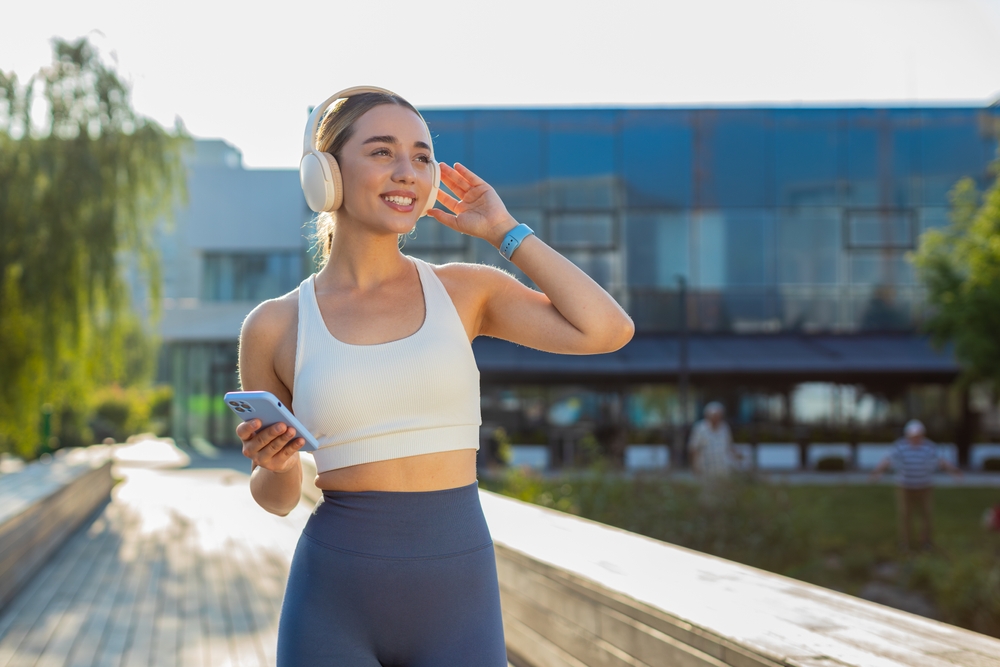
Let’s have an honest conversation. You’ve tried the 6 a.m. gym sessions. You’ve downloaded three different workout apps, used each of them twice, and still have a foam roller in the corner of your room that functions exclusively as a cat toy. You’re not lazy. You’re just bored of fitness that feels like punishment.
Enter walking yoga — the wellness trend that sounds like something a very calm person invented on a Tuesday, and yet somehow makes a suspicious amount of sense.
If you’ve been looking for a way to move your body that doesn’t require a changing room, a sports bra you need a physics degree to put on, or a playlist so loud it rewires your nervous system, this might genuinely be your thing.
So… What Even is Walking Yoga?
Walking yoga, sometimes called mindful walking, walking meditation, or kinhin in Zen Buddhist traditions, is exactly what it sounds like and also somehow more than that.
At its simplest, it’s the practice of bringing the intentional, breath-aware qualities of yoga into your daily walk. You’re not doing downward dog on the pavement (though respect if you do). You’re walking with purpose: syncing your breath to your steps, staying present in your body, and treating your walk as a moving meditation rather than a thing you do while doomscrolling Instagram on your phone. It’s also nothing to do with walking 10,000 steps.
Traditional yoga flows through poses on a mat. Walking yoga flows through space. You use your steps as the rhythm, your breath as the anchor, and the world around you — the crunch of leaves, the air on your skin, the mild chaos of a pigeon with a grudge — as your focus object.
Some practitioners add in arm movements, gentle shoulder rolls, neck releases, or even modified sun salutation sequences at natural pauses (like a red light, a bench, or a quiet corner of the park). Others keep it pure and simple: walk, breathe, notice. That’s it.
The Science Bit (Kept Mercifully Brief)
Here’s where it gets interesting beyond the vibes. Research consistently shows that both yoga and walking independently deliver impressive health benefits: reduced cortisol (that’s the stress hormone that makes you want to eat an entire bag of chips), improved cardiovascular health, better sleep, lower blood pressure, and enhanced mood.
When you combine the two, you get something greater than the sum of its parts. Walking yoga activates the parasympathetic nervous system, the rest-and-digest mode that most of us spend roughly 4% of our day actually in. Controlled breathing while walking has been shown to reduce anxiety markers more effectively than walking alone or seated breathing alone.
And movement-based mindfulness (which is exactly what this is) is often more accessible for people who find seated meditation maddening. If you’ve ever tried to sit still for 10 minutes and found your brain serving up an unprompted greatest hits of every embarrassing thing you’ve done since 2007, welcome to the club. Moving meditations give your brain something constructive to latch onto.
Why You Might Actually Stick to This One

Ah, the eternal question. Not whether this works, but will you actually do it — the only fitness metric that truly matters.
Walking yoga has a few sneaky things going for it on the adherence front:
1. You Already Know How to Do It
You’ve been walking since approximately age one. The barrier to entry here is breathtakingly low. No equipment. No gym membership. And no instructional video where someone named Brayden tells you to find your edge. Just shoes, a route, and a willingness to breathe on purpose.
2. It Fits Into What You’re Already Doing
That walk to the coffee shop? That 15-minute lunchtime lap around the block? The evening wander with the dog? All of those are now workouts. Retroactively. Well done, you’ve been exercising this whole time, and you just didn’t know it was yoga.
3. It Costs Nothing
Unlike boutique fitness classes, which absolutely are worth every penny but a lot of them, walking yoga requires precisely zero financial investment. The park doesn’t charge a membership fee. The pavement doesn’t have a waitlist.
4. It Scales to You
Energetic day? Lengthen your stride, deepen your breath, maybe throw in some shoulder openers at the traffic lights. Exhausted? Slow it right down. Walk like you’re in a film and the cinematographer needs more time with this scene. Walking yoga meets you where you are, which is honestly more than can be said for most fitness trends.
How to Actually Do it: A Beginner’s Guide to Getting Started With Walking Yoga
No, you don’t need a qualification. Here’s how to start:
- Set an intention before you leave. Even something as simple as noting that you’re going to notice your breath counts. You’re telling your brain this isn’t just a commute, it’s a practice.
- Start with a 4-4 breath pattern. Inhale for 4 steps. Exhale for 4 steps. This is the foundational technique, and it’s instantly grounding. If 4 feels short or long, adjust — there’s no wrong answer.
- Walk slower than you think you should. Walking yoga isn’t a power walk. You’re not trying to raise your heart rate into cardio territory (although even a moderate pace has cardiovascular benefits. You’re trying to arrive somewhere mentally as much as physically.
- Use your senses as anchors. When your mind wanders to your inbox, your grocery list, or that thing you said in 2019, gently bring attention back to what you can see, hear, or feel in your body right now. This is the yoga bit.
- End with a moment of stillness. Even 30 seconds standing quietly before you head back inside makes a difference. It’s the cool-down for your nervous system.
Who is This For?
Honestly? Almost everyone. But specifically, walking yoga tends to resonate most with:
- People who’ve tried traditional yoga and found it either too slow, too fast, or too expensive to do consistently.
- Those who are in the middle of a lifestyle or diet reset who want a movement practice that supports the process rather than adds to the stress.
- People who spend their days in their heads — desk workers, creatives, caregivers — who need to inhabit their bodies for a bit without it feeling like a chore.
- People who, and this is a real demographic, just really like walking and want permission to call it their fitness routine. It is. You have permission.
Frequently Asked Questions About Walking Yoga
Is walking yoga actually good exercise?
Yes. Even at a gentle pace, walking yoga delivers real cardiovascular, respiratory, and mental health benefits. The added breathwork and mindfulness component means you’re also actively reducing cortisol and training your nervous system to manage stress — something a standard walk doesn’t reliably do.
How long should a walking yoga session be?
Even 10 to 15 minutes is enough to feel the effects, especially for beginners. Most practitioners aim for 20 to 30 minutes. Because the intensity is low, you can also do it daily without needing a recovery day.
Do I need any yoga experience to try walking yoga?
None at all. Walking yoga is one of the most beginner-friendly movement practices around. If you’ve tried traditional yoga and found it intimidating or inaccessible, this is a genuinely low-stakes entry point — no mat, no class, no poses required.
One Last Thing…
Here’s the quiet truth about fitness that the industry doesn’t love to advertise: the best workout is the one you’ll actually do.
Not the most intense one. Not the trendiest one. And not the one that burns the most calories per session or requires the most impressive equipment. The one that fits your life, respects your energy levels, and doesn’t fill you with dread the night before.
Walking yoga is not going to give you abs in 30 days. It’s not going to go viral the way a 4 a.m. cold plunge challenge does. But it will make you more present, calmer, and slightly less likely to snap at someone in a supermarket queue — and in the grand scheme of things, that’s not nothing.
So tomorrow morning, before you open your phone, put your shoes on. Step outside. Breathe in for four steps. Breathe out for four steps. Look up.
Congratulations. You just did yoga.



Leave A Comment