
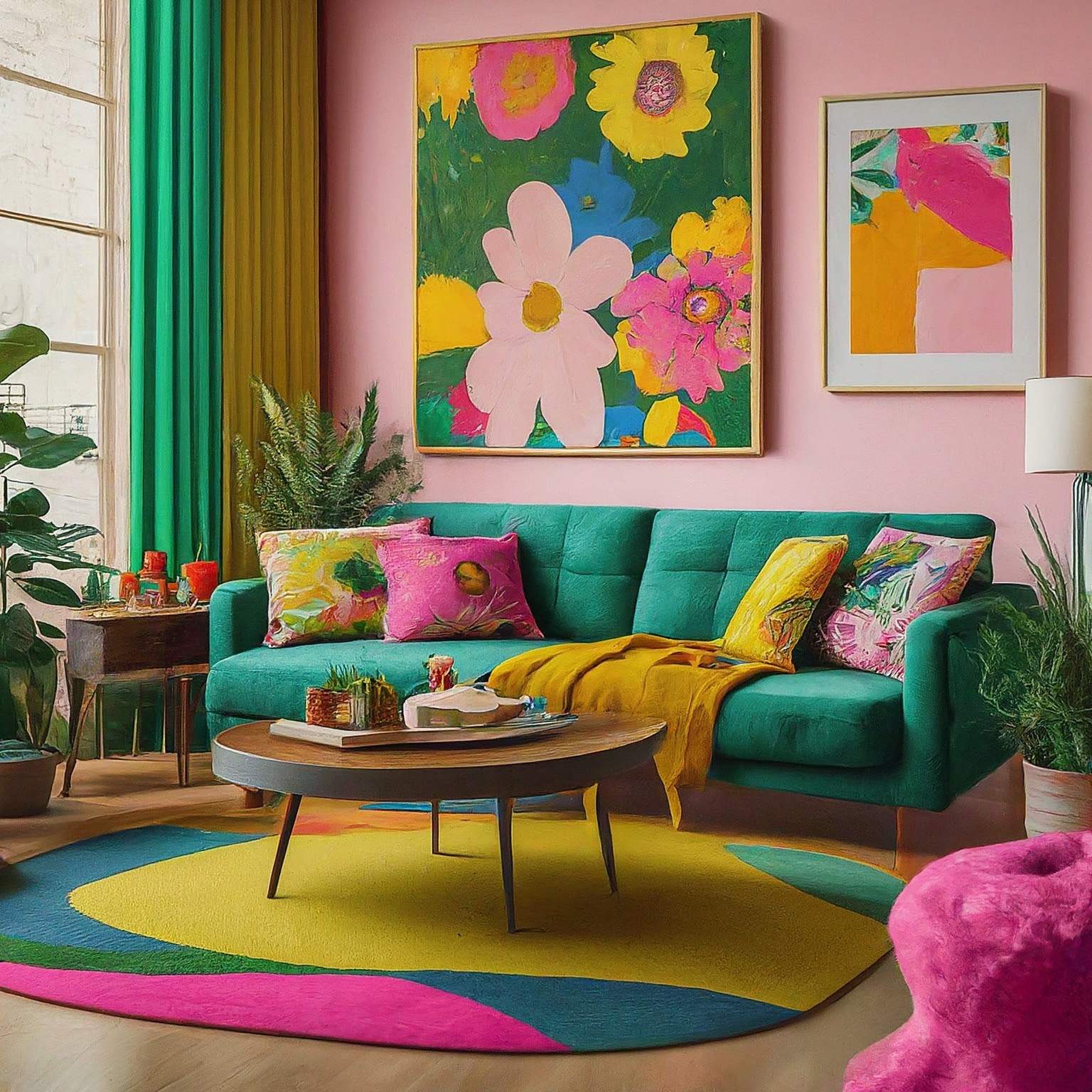
Beige walls, beige couch, beige soul. For the better part of a decade, “minimalism” told us that the secret to a calm life was a home with the personality of a hotel lobby. Then somebody opened TikTok, saw a living room that looked like a fruit salad threw a party, and a movement was born.
Welcome to dopamine decor — the design trend that swapped “less is more” for “more is more, actually.” And it’s not just a passing aesthetic. It’s backed by something your minimalist friend’s all-white kitchen never had: actual brain chemistry.
Let’s get into why your home might be due for a colorful intervention.
What is Dopamine Decor?
Dopamine decor is interior design built around one simple question: does this make me happy when I look at it?
Think clashing colors on purpose. Bold patterns that have no business working together but somehow do. Quirky vintage finds, maximalist gallery walls, and furniture that says “I bought this because it made me smile,” not “I bought this because a magazine told me beige was timeless.”
The name borrows from “dopamine dressing,” the fashion trend where people wear bright, joyful clothing to boost their mood. Dopamine decor just took that idea and applied it to your living room, your bedroom, and yes, even your bathroom.
If you’ve ever felt a tiny jolt of joy walking into a friend’s wildly colorful kitchen, congratulations — you’ve already experienced dopamine decor in the wild.
The Science Bit (Don’t Worry, It’s Painless)
Here’s the actual neuroscience hiding behind the hashtag:
- Color affects mood. Studies on color psychology consistently link warm, saturated colors with increased energy and alertness, while certain hues are tied to calm or focus.
- Novelty triggers dopamine. Your brain rewards new, unexpected visual stimuli — which is exactly what a gallery wall of mismatched art does, and exactly what a flat gray wall does not.
- Environment shapes nervous system state. The same way a few small habit shifts can transform your entire day, the visual environment you marinate in for hours every day quietly shapes your baseline mood.
In other words, minimalism wasn’t wrong about wanting less stress. It just picked the wrong tool. Stripping away color doesn’t necessarily calm your nervous system — sometimes it just bores it.
Minimalism’s Glow-Down
Minimalism promised serenity. What a lot of people actually got was decision fatigue dressed up as a Pinterest board, plus the low-grade anxiety of owning a white couch near anyone who eats spaghetti.
Three reasons the all-neutral era is losing steam:
- It’s expensive to maintain. “Quiet luxury” minimalism often requires constant upkeep, pricey neutral materials, and zero tolerance for clutter — which is its own kind of stressful.
- It photographs better than it lives. A stark, empty room looks serene in a magazine. It feels a little like a waiting room at 11 p.m. on a Tuesday.
- It optimized for “looks calm” instead of “feels good.” Real calm — the kind connected to genuine happiness and a fulfilling life — usually comes from comfort and meaning, not from the absence of color.
Dopamine decor isn’t anti-calm. It’s just pro-joy, too.
How to Start Your Dopamine Decor Glow-Up (Without Redoing the Whole House)
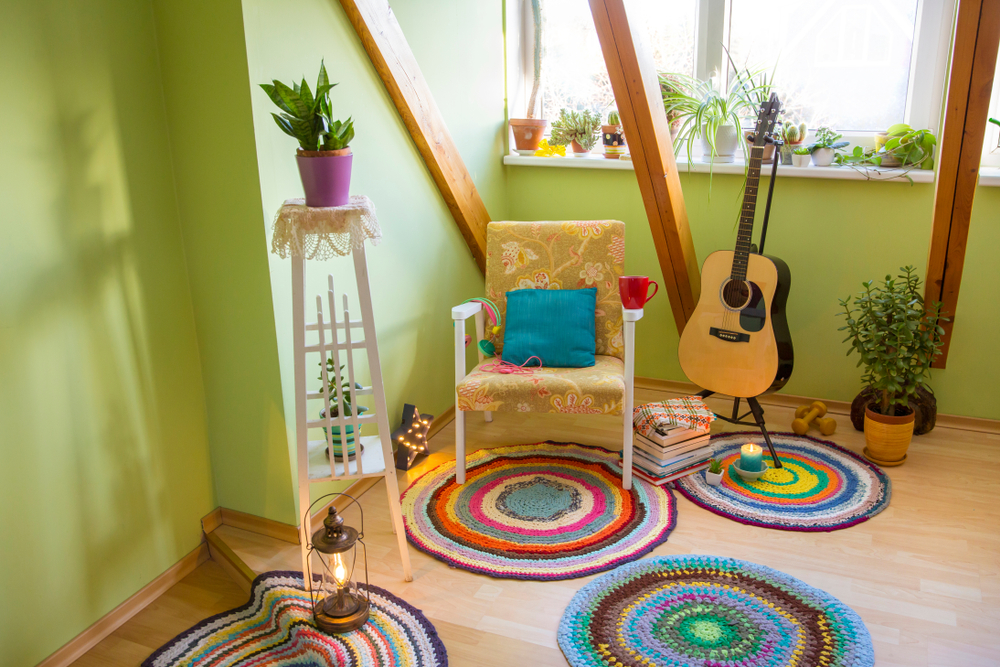
You do not need to repaint every wall neon tomorrow. Start small.
1. Pick a “joy color,” not a “safe color”
Forget what’s trending. What color makes you feel something — energized, cozy, playful? That’s your anchor color for dopamine decor, not whatever shade Pinterest decided was “calming sage” this quarter.
2. Layer in pattern like you mean it
Throw pillows, rugs, curtains — pattern is the easiest, lowest-commitment way to dip a toe into maximalism. Clashing patterns are not a mistake in dopamine decor; they’re the whole point.
3. Build a gallery wall of things that actually delight you
Skip the generic art print. Use travel photos, weird thrift-store paintings, your kid’s art, a poster from a concert that changed your life. Novelty is dopamine fuel.
4. Treat your space like a mood board, not a museum
Minimalism asks “does this serve a function?” Dopamine decor asks “does this spark something?” Both questions are valid — but only one of them tends to make you smile when you walk past it.
5. Stay organized so the joy doesn’t turn into chaos
Color is the fun part. Clutter is not. If you want maximalist vibes without the visual noise, pair your new colorful pieces with a few practical organizing habits so everything still has a home.
Dopamine Decor Isn’t Just About the Living Room
This trend has quietly spread everywhere people spend time:
- Bedrooms with colorful linens instead of “hotel neutral” everything
- Home offices with bold accent walls behind the Zoom camera
- Kitchens, where a cheerful space can make healthy eating actually feel sustainable instead of like a chore
- Bathrooms, the most overlooked room in the entire “treat yourself” conversation
Even your morning routine benefits. Walking into a colorful, energizing space first thing is a small, free upgrade — not unlike these low-effort morning habits that mimic a wellness retreat. Your environment is part of your routine, whether you planned it that way or not.
Is Dopamine Decor Just a Trend?
Sure, somewhat. Every design movement eventually gets its turn in the “what were we thinking” pile (RIP, accent wall made entirely of barn wood). But the underlying idea behind dopamine decor — that your home should make you feel something good, not just look impressive in photos — has staying power.
Trends fade. The desire to feel happy in your own living room does not.
The Bottom Line
Minimalism wasn’t the villain here — it just over-promised and under-delivered on joy. Dopamine decor flips the script: instead of removing everything until a room feels “safe,” it adds back the color, texture, and personality that actually make a space feel like yours.
So go ahead — buy the orange couch. Hang the weird art. Your nervous system, and your Instagram grid, will thank you.




Leave A Comment